trešdiena, 2014. gada 9. jūlijs

Clockwork Angel with a pinch of salt

I welcome you to our second installment of reading Clockwork Orange Angel with a decent bit of salt.
Last time we met our 2 male protagonists - Jem and Will, we found out their main occupation and also established the organization representing the baddies of this book. Now we fast forward to our heroine/wallflower Tessa Grey, coming into Southampton on a ferry in the merry month of May.
Kudos for specifying the time, it is just more fun this way, however not where she is going. We get a description of Tessas` love for her Clockwork angel - a mysterious brass clockwork pendant which her mother wore when she died and Tessa is wearing as we speak. It ticks and seems to be working even though nobody has wound it. Name dropping aside, I like this passage, it enforces the idea later in books that the pendant supports Tessas` existence. Which is ok until we realize that Tessa had existed for a good while just fine without the angel around her neck. But details, details, who needs those.
She arrives to Southampton following death of her aunt and an invitation and a steamship ticket from her brother - Nate. He insisted that she came to Southampton and not Liverpool because Southampton has nicer weather and not because Southampton is closer for him to pick her up as he lives in London, because that is logic, folks. Then there is a fact that Liverpool was far more industrial and therefore not that nice in general, so why is Liverpool mentioned at all? Perhaps the author wanted to let us know that she actually researched this. Which is not bad, I can totally get behind this as long as it has some meaning for the story other than “Ha! I researched that, now admire my resourcefulness!” for the author. Proposing her to go to Southampton based entirely on weather forecast makes Nates` excuse and Everything about him super suspicious.  Perhaps this was a tool author used to render him untrustworthy to readers, but it also rendered him daft. Fair enough, carrying on.
Tessa observes that the weather in Southampton is not nice after all - cold rain and general clamminess. I mean, this is not the best first impression of a town, but weather changes, rain stops, unless the entire city is secretly owned by the Addams family. Still, trademark UK downpour? I will start with my pet peeve - the Location. Many good novels and stories are set in London/England. Yet whenever we come across descriptions of London in this book, it is cold/rainy, dour, polluted and dangerous. Whilst this may be true in some cases, especially keeping the fictional age in mind, it feels like London has a timezone/microclimate of its own with a permanent rain cloud above. I have been to London only once, in February which is by far not the prettiest month to be there, I still experienced a variety of weather conditions ranging from grey drizzle and wind to crisp, dry and cold sunshine.
According to sunlight averages, air pollution aside, annually London does receive an average of 1000 hours of sunshine less than New York. From character perspective of Tessa Grey it makes sense that London always seems grim because of the lack of sunlight she has been used to, associations with loss, insecurity and trauma if she felt those that is.
Returning to text, we get the description of Tessas` state -  technically she is a homeless person. Having lived in relative poverty, exactly how relative, I will soon elaborate. Once her aunt and sole breadwinner in their household died, she sold most of her belongings to pay the funeral and then followed her brother to London. Which seems sound, but not so much once we read more into the book and look into history.
Back in the day children worked. Yes, those factories did not run themselves. Yes it sucked. In her day and age Tessa would have worked in a factory, a cotton mill or a coal mine, less likely - as a chimneysweep. Especially given the circumstances they lived in - her aunt being the sole breadwinner in household would not have worked when she had 2 extra mouths to feed. Women and children were paid half or even less of what a grown man would earn. Only in 1876 did the Working Men`s Party propose banning the employment of children under age of 14 and womens rights for equal wages was only established in 1903  and the book is set in 1878  where Tessa is 15 or 16 and nobody gives a damn about poor children. Heck, not all poor children could even attend school, so the fact that she and her brother could read and write means that their aunt could afford schooling them. Tessa and her brother had, in fact, enjoyed quite a luxurious life reserved only to children in upper classes. Did Tessa or Nate work? If so, then where? How poor exactly were they? Where exactly did her Aunt work? Did they inherit something?


Tessa at tender age of 8?


Here we come to doubt number two. Later in book Nate is described as a kind of guy you would not trust. We do not know this, Tessa, on the other hand has grown up with him. So selling all her belongings and sailing off to be met by her not very trustworthy brother is not smart indeed. I will chalk it up to post-traumatic confusion.
We get the sad part where no one waved her goodbye when she left New York. I like this bit of sentiment - though it would have worked better in another setting - in a setting where she actually mourned her aunt`s death, considered the odds of surviving in London, better yet - surviving her trip to London - did she take her own food or did she have meals on the ferry? Was that included in the price of the ticket? And other such vital concerns. Here, however she just notes to herself that it was not merry memory indeed, despite the sky being blue and brass band playing since no one waved to her. We do get this little snipplet

-it had been nearly two weeks since she had spoken to a soul, having kept almost entirely to herslef

In 1820 ships were covering similar distance in 11 days. Other than doubting travel duration of a steam ship from New York to Southampton in late 1870s we find out that Tessa is either incredibly shy, a hermit or is mourning for something unbeknownst to us. If you see the same faces on the boat for around 2 weeks, you or they eventually will start a conversation, unless you purposefully avoid it. In fact - it would be even advisable - people going in the same direction as you might know more about where you are going. They may offer advice or even help if they like you enough. Having friends in a new, unknown, possibly hostile place always helps. The author does not mention if Tessa did anything else on the boat - perhaps reading? She seems to enjoy that quite a lot. However all she seems to have done is meditate on her clockwork pendant and reminisce about how much she loved it, for almost two weeks.
So Tessa disembarks and Nate is not there to meet her. Instead there is this creepy man who knows her name and tells her that Nate sent him. Whilst cringing she decides to follow him through the crowd until she abruptly stops in front of a black, gleaming cab that has golden letters across its side But

-the rain and mist were too thick for Tessa to see them clearly.-

This leads me to believe that either Tessa has some problems with eyesight or the mist is supernaturally thick. She is supposedly standing in front of the cab, capable of distinguishing that the letters are gold, but does not see well enough to read the name. That pesky London mist, hiding the name of the secret organization responsible for 97% of Londons` supernatural crime!
We get our first gander at the main antagonists of this book, this is not even a spoiler. No, seriously - two women of unidentifiable age - one tall and bony, the other - plump and short with hands so large they resemble paws, dressed like pimps. They introduce themselves as sisters - Mrs Black and Mrs Dark. Later in book they go by the name “The Dark sisters”, but, humm, seriously? Their address implies that at least one of them has married. But the “Dark” implies that it is their family name. If only one of them did get married, did she look for a man whos` surname was “Black”, just to match her family name and occupation? If they were pseudonyms, perhaps they could have chosen something slightly less plot-obvious - like generic English surnames of that time? There is nothing wrong with descriptive surnames per se, some classic writers used them like whoa. But it is a bit tricky to keep the suspense if the name of the villain is Mr. Baddy McBaddins. 


Mrs. Dark is ready to prowl the streets unnoticed


By the way we never get their first names. And we never get to know if Mrs Dark kept her family name after marriage/married someone who had the same family name/her male relative/just decided to start calling herself Mrs, since she was already past the age where calling one Miss would be appropriate?
We will never know as they are minions and only exist to remind us how awful they are.
The Dark sisters explain Tessa that Nate is busy and sent them to meet her. Naturally Tessa,  not having worked a single day in her life, is a bit surprised and disappointed that in the middle of the day her bro may be busy - again, we are not talking about nowadays one-day-notice absences, we are talking about 10-12 hour working day in Victorian London, depending on occupation.
All is suddenly ok, as the Dark sisters hand Tessa a note where Nate approves of them. Let me reiterate, her not wholly trustworthy brother sent two women that look like pimps and go by names “Black” and “Dark” to pick her up and gave them his highest recommendation on a note of paper that The Dark sisters themselves produced. Run Tessa, RUN!
Now, the book does mention that it was explicitly Nates` handwriting, for all we know he might have sold her off to a brothel to settle his gambling debts. Again, we are not supposed to know it yet, Tessa has known him all her life. Oh, sancta innocentia!
And so they clambered into the carriage but not before the mist clears conveniently revealing the aforementioned Ouroboros and a name - Pandemonium Club. OMG Another Clue and all that in just the first chapter!
This closes chapter one, dear readers, all the main players are introduced, you may as well stop reading here. But do not fret, I might be back with the following chapter!


trešdiena, 2014. gada 25. jūnijs

Klusie Saulgrieži, vai kā man pietrūkst/ Quiet solstice or what I miss

Teju pirms diviem gadiem es veicu Eiroremontu savai vecajai dzīvei. Tādu pamatīgu, ar pārvākšanos un griestu paneļiem, tiesa paneļu vietā tika nomainītas debesis - Latvijas tumšākzilās pret blāvi gaišzilajām Beļģijas ārēm.
(Šeit es atļāvos ieviest nelielu atkāpīti angļu valodā tiem, kam Jāņi ir kaut kas jauns)
Bet bēdīgā kārtā, jau divi gadi aizvadīti bez saulgriežu svinēšanas. Nesvin Beļģi, nesvin. No visām baznīcas dienām, kas kalendārā atzīmētas ar sarkanu, Jāņi nav vienas no tām. Tā nu rit laiks un Jāņu sāk trūkt arvien vairāk. Pirmīt nesanāca, jo man, kā jaunajai darbiniecei brīvdienas nepienācās, naudas arī bija pamaz, bet apritējis nu jau gads un atkal iztukšītis. Pietrūkst dūmu, dziesmu, paparžu un Rojas delikatešu, pietrūkst siera un meijām pušķotu ielu. Šogad samierinājos ar saulgriežu pusnakts pastaigu un Juras Laikmeta parka pirmās filmas skatījumu līdz pulkstens 4 rītā, ne gluži līdz pirmajiem gaiļiem, bet līdz pirmajiem strazdiem gan. Bet tas jau ir neliels uzlabojums, cerams nākamgad braukšu uz Jāņiem un svinēšu tos dabiskajā vidē.
Ceru, ka Jāņus nosvinējāt lustīgāk nekā es.


Almost 2 years ago I gave my life a serious facelift. A really major one, with moving and changing my environment, more specifically - changing of the skies. I left the Latvian darker-blue one and moved under the pallid Belgian sky.
Two years I spent without celebrating solstice. For those of you who find this concept foreign, imagine all the awesomeness of Christmas (for those of you who celebrate it) but in summer (except for people in Southern hemisphere and equatorial climate) and with more beer and songs, and closer to nature. It is called "Jāņi", Google it.  For many it is also an event that brings people closer to their roots and/or family.
Alas, Belgians just do not do it, not in a way that matters anyway. From all religious celebrations that are made into bank holidays, solstice day or St. Johns` day (to make it christianity-appropriate), is not one of them. Time passes and I start missing the solstice fest more. Last year I could not go back, yet another year has come to pass and again, nothing. I miss the smell of smoke, the singing, the ferns and smoked fish, I miss home-made cheese and streets decorated with freshly cut young birch saplings. This year I found some consolation by taking a solstice-night walk and watching the Jurassic Park (first movie) until 4 am. Not exactly until the sunrise, but at least until the first bird calls. This is a mild improvement, but next year I wish for a full-scale celebration in its` natural habitat.
I hope that you had more fun during the solstice (if that is your thing).


trešdiena, 2014. gada 18. jūnijs

Deconstruction, Infernal Devices, Clockwork Angel, Intro part 1.

Sorry - this entry is only in English - too much text to translate as a hobby.
Deconstructing Clockwork Angel by Cassandra Clare.


I started reading these series as guilty pleasure - as a literary equivalent of a bag of chips - not really good for me but still fun to read. This book quickly transgressed from fun to tedious to subsequently “I do not care anymore”. Inevitably I wondered if anybody had made a deconstruction yet, surprisingly my search returned with nothing. Having followed several brilliant deconstruction posts has made me somewhat bolder in my attempts to deconstruct something myself.
Before I start I must get a couple of nicks out of the way.
Firstly I have nothing against the author and her personality/past/choices in life. I'm not discussing her. I`m discussing her work which many of us have a chance to read and appreciate.
Secondly - I have nothing against fan fictions turned original works.
Thirdly - I have not read the book series which this is meant to be a prequel of, Mortal Instruments series, was it? I`m too lazy/do not have the time for 5+ books and counting, furthermore according to some, this series (The Infernal Devices) is regarded as better and has only 3 books, which is doable.


Without further ado, I proudly present chapter one.
Off goes the amazing adventure of cogwheels, aether and romanticized technology which still runs on magic...except that no, it doesn`t. Instead we are greeted by an entire poem by Elka Cloke. Theoretically it could fit, the book is set against the backdrop of fictional industrial revolution with coal dust in the air and werewolf labourers (spoiler) and, of course, the dour and dark “Victorian London”.There is nothing wrong with books beginning with quoting someone else, but the entire page of it, really?  The poem is meant to set us in the mood for it, but all it tells me is a) author did not bother creating the atmosphere herself/added another pronto page to her book, b) to flip the page and get to the story already.

After this prelude we are greeted by one of the  male protagonists (Will Herondale) who is investigating something. He casually kills a demon in the back alley, we learn that the internal fluids of these demons have corrosive qualities and he soon discards his corroding weapon.  This is important, in this particular case their weapons could be used only once or twice, he should not be alone in that alley, they should be two - his partner would have an extra knife in case Wills` weapons dissolve before the job is done. However his partner, male protagonist Nr 2, James Carstairs, who should have been covering Will, had wandered off somewhere, probably to do his other, less agreeable activities. I point this out now but in fact this issue keeps popping up across the series. You could chalk it up to youth and hormone-driven incompetence but it seems a bit off for people you dispatch on missions. If they are trainees, it could still be acceptable for them to commit mistakes and, say, just wander around collecting clues that have no chance of running off with the carcass of their partner in maw, but then you do not send them unsupervised.
50 points from London institute for not sufficiently training their subordinates in basic stuff.


And we return back to Will Herondale trying to locate his partner. We get the glimpse of the first “mundane” - a policeman.


- ..wearing a bell-shaped helmet, a heavy overcoat and a puzzled expression.


There is something that irks me about the description. The policeman is “wearing” a puzzled expression while wandering streets in the middle of the night. Did he see something? Was it a funny smell? Did he see Jem murdering a girl? People do not usually wander streets permanently puzzled. Did he have curious facial features that made him look puzzled even when his face was actually placid? Will contemplates stealing the truncheon of the policeman to see him “flap around” but decides against it. If this was a one-off passage describing non-magical folk as slightly silly, I would let it slide, but I regret to say it is far from true. The author seems to establish the paradigm non-magical folk - silly and hapless, magical folk - behave like normal people. Why would a policeman flap around if his truncheon was stolen? Do all policemen do that? Would he even notice the moment it disappeared or would Will make it obvious which kind of takes the fun and sneak out of the action and defeats the purpose of him staying invisible. If Will was invisible to the eyes of the policeman, would the truncheon also become invisible once he touched it or would it just float in thin air and give the policeman the willies? Perhaps that is why he would flap?

Better yet, once the policeman passes, Will immediately calls out to Jem. I do not believe that “just passed” qualifies as out of earshot, perhaps they use some magical frequency that is not heard by normal human ears to communicate while on missions?
They are supposed to be the supersecret, bedazzled only force between humanity and flesh-eating parasite-crabs. The book lets us understand that this is not the first time Will does this. His actions upset Jem “the guy who leaves his partner behind”, strangely that upsets no one else, like institute higher-ups who probably are keeping a finger on the pulse regarding who knows what about them. Contrary to what the book tells us I feel that they are not at all concerned with keeping themselves secret. It seems more like them relying on simple folk being ignorant. Or perhaps they are considered as FBI agents - depending on their objectives some are undercover and some are not but everyone knows they exist? This is just a speculation, of course, all I get from text is that they do attempt to hide from general population, so there better be a reason for it. On the other hand shadowhunters are considered haughty jackasses by the rest of the underworld, so we never know if they actually go around annoying people and the commoners just go, oh, ok, it is Those people again, let us pretend they do not exist and maybe they will go away.
Anyway, eventually Will finds Jem and we get a full visual of the male Protagonist(2). To make it short, imagine an Asian albino. The specifics of his appearance get explained later in books and I am quite fond of the explanation. I will later elaborate why. But currently we are stuck with this.


-The young man who appeared at the mouth of the alley was pale in
the lamp light - paler than he usually was which was quite pale indeed -


Pride&Prejudice go home, you`re drunk. Why is this line here? It sticks out like a sore thumb in otherwise contemporary writing style, well if you ignore a handful of “quite” scattered across this book. I did not notice the same trend in the following books of the series. Was it a literary cameo? Does anyone know if such things exist? An expression the author loved too much to let go of in spite of better judgement? Was it an internal joke meant only for readers who know the author? I want to know.
We do not get the explanation for this stray line but we do get Jem in his war paint, smeared with blood of the enemies he'd slain valiantly in uneven combat. While coming home from the white tie event in opera, he had been ambushed by masked enemies, outnumbered he fought tooth and nail until he tore out the throat of his last opponent with his bare hands.


- There were dark stains  across his white shirtfront, and his hands were thickly
smeared with red.


The deal is shadowhunters have the sexay black leather gear they wear for the outings of this sort, Jem, on the other hand is wearing a white shirt, why? Getting your bloodstained shirts white in Victorian setting must be not only time consuming, but also expensive, so I can imagine no other reason why he would be caught in an attire like this. He probably must have been to see the queen. Except that he did not do any of the other things I mentioned above, he just found a dead girl in the alley, so why does he look like he had emerged from a battleground? Is anyone else cringing from the probable amount of blood-borne diseases this girl might have? She was from a poor background, living in society that does not offer great health standards or disease screening, she had just died, so the microorganisms in her blood are still quite lively and ready for a new host.
If anything it looks to me like he is the perpetrator. I understand that he was trying to investigate, but what kind of on-spot investigation leaves you with hands and clothes thickly smeared with victims` blood? Does he wipe his dirty hands against his clothes?

Will is rightly worried assuming that it was the blood of his partner. What a lucky bastard Jem is, not only he gets away with disregarding his and his coworkers/friends safety, his partner is actually concerned about him instead of saying “serves you right for leaving me alone and wandering our without support”. Will does call him a disloyal bastard. Bonus points to Will for being observant.
So Jem explains that probably the demon Will killed earlier was after the now-dead girl. However something is fishy about this case. Apparently there is not enough blood in the alley for it to be the demons` work. There is plenty blood on Jem though, wink-wink, nudge-nudge.

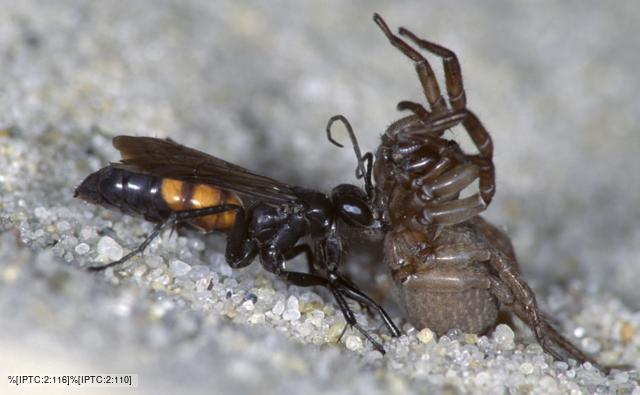
Furthermore killing the girl does not match the behaviour pattern that demon exhibits to its prey. We get a short description of the demon and some bad terminology. They use term “Brood parasite” to describe parasites living in broods, which this species of demon does. I`m not aware if this is a terminology the author made up for the story or is it something she heard somewhere. In our mundane world Brood parasites use their hosts to raise their young, not to feed off their bodies. Long story short - think of a cuckoo bird and you will get the idea. This demon is not a brood parasite, it acts more like the spider wasp which is an ectoparasitoid.

(Now you have reasons to be both happy and terrified - you are welcome).

Bad terminology aside, I do like that the author specifies this, it adds to the worldbuilding and makes it more creepy if that is your thing. The unfortunate thing is that it is the last time you are going to hear about this or any other demon in such detail. Savor it.

We find out that the girl was indeed stabbed several times by someone who was not the demon Will had just killed and that she was running away and died of blood loss. Not knowing exactly where she was stabbed makes it a bit tricky but knowing that she did not die of infection, I will go ahead and presume that it was the vitals, furthermore it appears that the evildoer had left a knife in the victim for the laughs. How far can a young girl run before bleeding to death? Far less than action movies would let you assume. For that matter running with several stabs in your vitals is close to, well, not really possible. However no one will investigate her death in such detail, it will never be explained what purpose her death served apart from showing how chaotically awful some warlocks are (spoiler) and leading Shadowhunters to Tessa (another spoiler). I guess she is what you could call an obvious plot device. Just to put this in perspective - the entire purpose of her existence was being killed and leading the male protagonist Nr1 to Tessa.


We also get the kind of justification on why Jem is all bloody - see, he retrieved the knife  from the the girl. Unless the knife was lodged inside the abdominal cavity of the victim in some outlandish and painful way forcing Jem to actually rummage through her guts to retrieve it, I still cannot imagine for the life of me why he would all be splattered with blood. Recently dying of bloodloss would mean that upon your death you have little blood left (also no blood pressure) - little to no splattering. So why blood all over the place? Fresh corpses do not just explode, which implies that, yes, given circumstances corpses can explode. But this is not the case. Fast forward - the killed girl is Emma Bayliss, killed by someone on the street for no obvious reason. She took the knife of the attacker with her - smart girl. She had the knife In Her Hand or close by as she probably must have dropped it while losing consciousness. So Jem has no excuse to be bloodstained unless he was the killer. Jem, I`m looking at you.

We return to our both male protagonists examining the knife. Upon closer inspection they find out that they have a clue - the knife had a symbol of Ouroboros (Two snakes biting each others tails) on it. Oh my god this is so exciting, people, they have a clue! This looks like the work of alchemists - the foolish humans to dabble in the dark arts! And they are gone - you will never hear of them again either. But wait - they Do plan to investigate this case, although it seems like they mean it in the loosest of terms.

Will - Maaan, I totally love hunting down that kind of opponent - bloody rags and pentagrams  (Which, I hope, implies some level of enthusiasm).
Jem - Nah, man, I have been your friend and partner for years and I do not trust your judgement on all things downworld. (Sarcasm perhaps?)
Will - Cool - drugs, hookers and gambling! (More sarcasm?)
Jem - Whatever

And this is basically their relationship. At least from Jems` side. He is described as that kind of caring and nice guy who helps elderly ladies cross the street, but I just do not see it here. Or anywhere.

By the way, this happened in April, or so the book says, so I am exactly too months too late to be captivated entirely by the weather.
Anyway, spare me and I hope you enjoyed yourselves. You are also welcome to comment and remark.
Cheers!

Ievadam/ Introduction

This is meant to be a bilingual blog, maybe more than that.
Apart from obvious linguistic benefits, you shall be entertained, worry not. By the adventures of most extraordinary nature.

  • Observations and notions of stitching and other crafts of such nature
  • Deconstructions of fine literature and otherwise
  • Foreign speech
  • Many more things unlisted above
And forth we shalt sail.
PS: I really hope this fancy writing style wears off. Until then - enjoy the cake

Sveiki! Šim jābūt vairākvalodu blogam, jo tādam tam pienākas būt. Citādāk nevar.
Saturs būs, domājams, interesants un rosīs pārdomas. Šeitan tiks stāstīti visneparastākie piedzīvojumi .

  • Novērojumi šujot un veidojot citus rokdarbus
  • Dažādu žanru literatūras dekonstrukcija, tā gan tikai Angliski, piedodiet man, lūdzu
  • Runāšana citās mēlēs
  • Daudzas citas augstāk nepieminētas lietas.
Un tādā garā.
PS: Es ļoti ceru, ka šis dīvainais rakstīšanas stils pēc kāda laika pazudīs. Līdz tam brīdim - lai jūs priecē kūka